
Is Komodo safe? For most travellers, the main health and safety risks of a trip here can be managed with sensible preparation. But official guidance for Indonesia as a whole warns that the standard of medical care can be limited, especially in remote areas. That makes preparation and travel insurance more important than they might be elsewhere.
This guide to Komodo travel safety covers health preparation, heat, everyday health risks, insurance and medical evacuation, the national emergency number, and what to do after a strong earthquake on the coast. It draws on guidance from named official bodies and says so where that guidance applies to Indonesia generally rather than to Komodo specifically. Where local details could not be confirmed, it says that too.
This page is general information, not medical advice.
Before you go: health preparation
The most useful step is to speak to a health professional or a travel clinic well before you travel. Vaccinations and any advice about malaria depend on your health, your plans, and current guidance. That appointment is where they should be decided, not on a travel website. This page does not list vaccines or give a malaria risk rating.
If you take medicines, check the official rules on bringing them into Indonesia before you go. These are entry rules, not medical advice, and they are worth confirming with an official source rather than relying on general travel pages.
Komodo travel safety: heat and sun
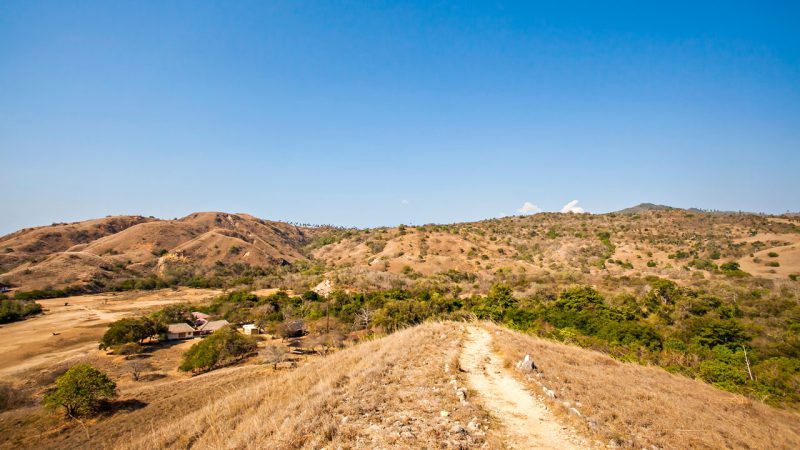
The walks in the park are short but exposed, with very little shade, and heat is the main consideration for most of the year. Our guide to how heat varies through the year covers seasons and conditions, and the guide to the climb on Padar explains what the island’s best-known walk involves.
The NHS in England describes how to recognise and respond to heat illness. Its guidance is general, not specific to Indonesia.
Heat exhaustion. Signs the NHS lists include:
- tiredness, dizziness or a headache
- feeling sick or being sick
- heavy sweating, with pale, clammy skin
- cramps in the arms, legs or stomach
- a high temperature and intense thirst
The NHS advises moving the person somewhere cool, removing unnecessary clothing, and giving plenty of water or a rehydration drink. Cool their skin with water and fanning. It says the person should start to feel better within about 30 minutes.
Heatstroke is a medical emergency. The NHS lists signs including a very high temperature, hot skin that is not sweating, fast breathing or a fast heartbeat, confusion or a lack of coordination, a seizure, or loss of consciousness. It also treats as an emergency anyone still unwell after 30 minutes of resting somewhere cool, being cooled, and drinking fluids. In Indonesia, see the emergency section below.
Prevention. The NHS recommends drinking plenty of fluids, especially when active, and wearing light, loose clothing. It also advises keeping out of the sun during the hottest part of the day and limiting alcohol. General sun protection, including sunscreen, a hat and covering up, also helps on exposed walks and boat decks.
Health risks worth knowing
Animal bites and rabies
Rabies is present in Indonesia. In a March 2025 circular, Indonesia’s Ministry of Health identified 26 of the country’s 38 provinces as rabies-endemic. The ministry encourages people to report any bite promptly to the nearest health facility.
The UK Foreign, Commonwealth & Development Office (FCDO), in its advice for Indonesia, says to seek medical help immediately after any animal bite or scratch. In a 2023 article on rabies in East Nusa Tenggara, WHO Indonesia quoted a doctor advising people to wash the wound thoroughly with soap and water for at least 15 minutes and to seek medical help immediately.
Mosquito-borne illness
The FCDO lists dengue among the health risks for travellers to Indonesia. Ask about dengue and other mosquito-borne illnesses at your pre-travel appointment, where advice can reflect current guidance and your own circumstances.
Drinking water and methanol
The FCDO states that tap water is not safe to drink in Indonesia.
It also warns that alcoholic drinks containing methanol have caused deaths and serious illness in Indonesia. Methanol cannot be detected by taste or smell, and the FCDO notes that even small amounts can be fatal. If you or someone you are travelling with shows signs of poisoning after drinking, get urgent medical help.
Medical care
The FCDO’s guidance on medical care applies to Indonesia as a whole. It says the standard of local medical care can be poor, and that in remote areas you may not be able to get treatment for serious injuries or illness.
That guidance is national. It does not assess individual hospitals or clinics in Labuan Bajo, and this page has not been able to confirm the current situation of medical facilities in the area. So it does not name, list, or compare any.
In practice, that means two things. Confirm your medical arrangements with your insurer before you travel. And ask your operator what happens if someone falls ill or is injured during the trip.
What to do in an emergency
119 is Indonesia’s national medical emergency number, coordinated by the Ministry of Health. According to the ministry, it can be reached from every regency and city in the country. Where a regency or city has no local emergency centre, calls are passed to the nearest hospital. The service can also be reached through the ministry’s SATUSEHAT Mobile app.
This page cannot confirm how the service operates in West Manggarai, the regency that includes Labuan Bajo, or what is possible at sea. Treat 119 as the number to call, but do not rely on it as your only plan.
The FCDO advises contacting your insurer quickly if you are referred to a medical facility. Keep your policy details and the insurer’s emergency contact somewhere you can reach them easily.
Travel insurance and medical evacuation
The FCDO advises having appropriate travel insurance for local treatment or unexpected medical evacuation. It warns that medical evacuation can cost tens of thousands of pounds.
The FCDO’s general guidance on travel insurance, written for UK travellers, suggests checking several points before you buy:
- Medical treatment. What the policy pays for, and whether emergency transport is covered.
- Evacuation and repatriation. Whether the policy covers getting you home or to suitable care.
- Activities. Whether everything you plan to do is covered. Some water sports are commonly excluded from standard policies.
- Existing conditions. Declare them. The FCDO warns that failing to do so may invalidate your cover.
- Alcohol. Most policies do not cover events that happen after drinking excessively.
- The small print. Read the exclusions before you buy.
This page does not recommend insurers, and only your policy can tell you what it covers.
Earthquake and tsunami preparedness
Indonesia experiences earthquakes, and coastal areas can be affected by tsunamis. The guidance from official bodies is consistent and simple.
Indonesia’s meteorology and geophysics agency, BMKG, advises people on the coast to treat strong shaking as a natural tsunami warning and to move away from the beach to a safe place, without waiting for an official alert.
The FCDO advises following the instructions of local authorities after an earthquake, bearing in mind that a tsunami could arrive within minutes. It also points travellers to BMKG for official information, including BMKG’s multi-hazard early warning app.
BMKG asks the public to rely on official information from BMKG and Indonesia’s disaster management agencies, and to disregard unofficial messages.
Safety topics covered elsewhere
Some safety questions belong to more specific pages on this site:
- what to check about a vessel and its equipment: our guide to checking a boat before you board;
- open-water conditions: currents and snorkelling;
- trails with dragons: how dragon observation is managed.
Frequently asked questions
For most travellers, the main risks can be managed with preparation. Official guidance for Indonesia as a whole warns that medical care can be limited, especially in remote areas. Good travel insurance, including medical evacuation, is important.
119 is the national medical emergency number, coordinated by Indonesia’s Ministry of Health. This page cannot confirm how the service operates in West Manggarai or at sea, so also keep your insurer’s emergency contact to hand.
The UK Foreign Office advises having insurance that covers local treatment and unexpected medical evacuation, which it says can cost tens of thousands of pounds. Check that your policy covers everything you plan to do.
No. The UK Foreign Office states that tap water is not safe to drink in Indonesia.
Seek medical help immediately. WHO Indonesia has quoted a doctor advising washing the wound thoroughly with soap and water for at least 15 minutes, then getting medical help straight away.
Leave a reply