
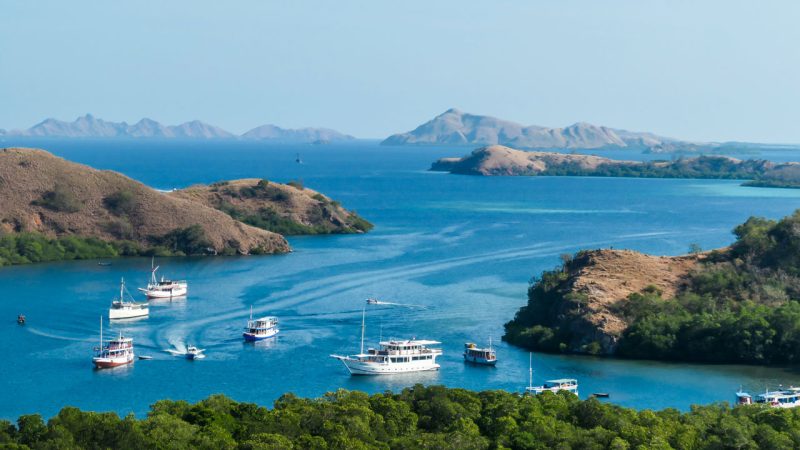
Ask two operators for a three-day Komodo itinerary and you will get two documents that look similar but are not the same. The stops overlap, the order differs, and the wording makes it hard to tell which differences matter.
That is because there is no official itinerary. Every day-by-day plan you are sent is a product built by the company selling it, arranged around a set of constraints that apply to everyone. Once you understand the constraints, any operator’s schedule becomes readable.
This guide explains what Komodo boat itineraries generally contain, how shorter and longer trips differ, and which parts of a schedule are shaped by geography rather than chosen. It covers no prices, no timings, and no particular company’s trip. For the wider planning picture, see our Travel Planning section.
There is no official itinerary
There is no single official itinerary that defines what a two-, three- or four-day trip must include. What exists instead is a set of common patterns shaped by geography, access arrangements and operating conditions.
That means two things for a traveller.
A published itinerary is a proposal, not a specification. It describes what an operator intends to do in normal conditions. Weather, sea state and availability all modify it.
Similar-looking itineraries can differ in ways that matter. Two trips billed the same length may include different stops, allocate different amounts of time to each, and handle disruption differently.
Neither is a criticism of operators. It is simply how the market works, and knowing it changes how you read a quotation.
The pattern many trips follow
Across a large number of independently published itineraries, a recognisable pattern appears. It is a pattern, not a standard, and the exact stops and their order vary between trips.
The opening stretch
Multi-day trips commonly begin around the middle of the day rather than at dawn. The first stretch tends to be a shorter one: a nearby island, often something with a short climb or a beach, and a snorkelling stop within reasonable reach of the harbour.
Many itineraries end this stretch at an anchorage known for its evening flying fox departure, before the boat repositions overnight.
The middle of the trip
This is where most itineraries concentrate their major stops. A summit viewpoint hike, a dragon trek at a ranger station, a pink-sand beach, a sandbar, and a manta site are the components that appear most often, in varying combinations and sequence.
On a three-day trip, this generally means the middle portion carries more activity than the parts on either side, though how it is distributed differs from operator to operator.
The return
The final stretch is usually shorter, commonly a last snorkelling stop before the boat returns to Labuan Bajo. Some itineraries schedule an early morning activity first; others head back directly. How much of the last morning is usable depends on the return time, which is worth checking if you have onward travel the same day.
How geography shapes the schedule
The constraints below explain most of what looks arbitrary in a published itinerary.
Distance sets the pace. The park is not compact. Moving between major sites takes significant sailing time, which is why multi-day trips exist at all and why a schedule cannot simply be reordered to taste.
Overnight positioning buys early access. The reason so many itineraries put a summit hike at first light is that the boat moves into position while passengers sleep. Without that overnight leg, the same hike happens later in the day, in heat and with more people on the trail. This single constraint explains more about itinerary shape than any other.
Some sites cluster and some do not. Several of the best-known stops sit relatively close together, which is why they tend to appear in the same stretch of a trip. Others are further out, and reaching them costs time that has to come from somewhere.
Tides and conditions govern access. Sandbars appear and disappear with the tide. Some snorkelling sites work better on particular currents. Operators build around this, which is part of why sequences differ.
Geography sets these constraints; operators choose how to arrange a trip within them. That is why itineraries of the same length can look different while still making sense. One boat prioritises an early summit start, another gives more time to snorkelling, a third takes a route that reaches a site the others skip. All three are working around the same distances.
The distribution of activity therefore varies by route and by operator. What stays constant is the underlying geography, and a schedule that ignores it should prompt a question.
What a shorter trip usually leaves out
A two-day, one-night trip covers less than a three-day trip. That much is straightforward. What it leaves out depends on the itinerary rather than following a fixed rule.
In general, a shorter trip has one overnight repositioning rather than two, which limits how far into the park it can reach and how many early-access stops it can build in. Operators typically respond by selecting fewer stops and prioritising the better-known ones.
Which stops are dropped varies, and no destination is automatically excluded from every shorter itinerary. Some shorter trips are built specifically around the best-known sites and reach them; others trade one for two others. If a particular site matters to you, ask directly whether it is included rather than assuming it will be.
One caution about the sources on this. Operators selling longer trips commonly describe shorter ones as insufficient. That may be reasonable, and it is also a sales argument made by a party with an interest in the answer. Compare the actual stop lists rather than accepting the characterisation.
What three days usually covers
A three-day, two-night trip commonly covers several of the park’s better-known itinerary components, such as a summit viewpoint, a dragon trek at a ranger station, a pink-sand beach, a sandbar, snorkelling stops, and a manta site.
Two overnight legs allow the boat to reposition twice, which is what makes early access to the main viewpoint practical while still covering sites at either end of the route.
It is worth being clear about what this length does not buy. It is a full schedule with limited slack. If a stop is missed for conditions, there is not much room to reinstate it later.
What four days can add
A longer trip does not necessarily reach a different set of destinations. What it can add is more time, a slower pace, and additional flexibility, along with the possibility of additional or repeated opportunities depending on the route.
That might mean longer at individual stops, a second attempt at a site missed for conditions, sites further from the usual circuit, or simply fewer hours in a day spent moving. Some four-day itineraries also include more diving or snorkelling.
How the extra time is used depends entirely on the itinerary. Two four-day trips can differ more from each other than a three-day trip differs from a four-day one, so the length alone tells you little.
What changes between operators
The variations worth checking when comparing itineraries:
- Which ranger station is used for the dragon trek. Komodo Island and Rinca both have them, and operators differ. The experience and the journey time are not identical
- Stop selection. Which islands and snorkelling sites appear at all
- Sequence. The same stops in a different order, usually for tide or positioning reasons
- Time allocated at each stop. Rarely stated in writing, and a real difference
- What happens when a stop is unavailable. Some operators name a substitute in advance; others decide on the day
- Whether park entry is arranged for you, which our guide to park fees and permits covers
- How much say you have. Itinerary flexibility differs by trip format, which is covered in our comparison of an open trip or a private charter
The stops that depend on conditions
Some parts of an itinerary are firmer than others, and knowing which is useful before you are disappointed.
Manta sites are the clearest example. They depend on currents and on the animals being present, and substitution is common. Some itineraries state the possibility of a substitute site in advance; others leave the decision to conditions on the day.
Sandbars depend on the tide. Whether one is above water when your boat arrives is a matter of timing rather than choice.
Summit hikes depend on conditions and on access arrangements. The park operates a session-based system at its most-visited viewpoint, which affects when boats can bring visitors ashore.
Sea state affects everything. Crossings, anchorages and snorkelling all depend on it, and conditions vary through the year in ways our guide to the best time to visit sets out.
No operator can guarantee a wildlife sighting, and any itinerary implying otherwise is overselling. What a good operator can tell you is what they will do if a site does not work on the day.
How to read an itinerary you have been sent
A short method for turning a document into a comparison.
Count the overnight legs. They tell you how far into the park the trip reaches and how much early access is possible.
List the stops, not the adjectives. Strip out the descriptive language and compare the stop lists side by side. Differences become obvious quickly.
Identify which stretch carries the most activity. Then compare how the itinerary balances the stops, rather than judging it only by the number of places listed. A schedule with many stops and little slack is a different trip from one with fewer.
Look for the conditions clause. Does the itinerary say what happens if the manta site is unworkable, or the sandbar is submerged? An operator who has addressed this in writing has thought about it.
Check whether park entry is included or arranged separately.
Ask which ranger station the dragon trek uses, if that matters to you.
Match the trip length to the format, not the other way around. Whether you want a day trip or nights aboard is a separate decision, covered in our comparison of a day trip or an overnight liveaboard.
Frequently asked questions
Two- to four-day boat trips are widely offered. Three days and two nights is a widely offered length and can cover several of the park’s main itinerary components without much slack. Shorter trips generally cover fewer opportunities, while longer ones can add time and flexibility rather than necessarily a different destination list.
There is no standard one. No single official itinerary defines what a two-, three-, or four-day trip must include. A common pattern exists, but the stops and their order vary between trips.
It covers the main stops that most visitors come for. Whether it is enough depends on how much time you want at each and how much margin you want if conditions disrupt a stop. Compare the actual stop list rather than the label.
It depends on the trip format. Shared trips follow a set route; a private charter allows more input, within park rules and the conditions on the day.
Practices differ. Some operators name a substitute in advance, others decide on the day, and some make no provision at all. It is worth asking before you book rather than after.
Leave a reply