Eating in Labuan Bajo combines the traditional dishes of Manggarai and the wider island of Flores with the everyday food found across Indonesia. This page, part of our Labuan Bajo travel guide, explains what the local cooking is like, which dishes you may see named, and the kinds of places that serve food in town. It does not recommend restaurants or give prices, opening hours or dietary advice.
What local food in Labuan Bajo draws on
Labuan Bajo is in Manggarai, so Manggarai cooking is the local reference point. Its traditional dishes use corn, cassava, sweet potato and rice, and they are often cooked slowly: boiled into a porridge, steamed in leaves or bamboo, grilled over coals or smoked over wood.
A 2024 e-magazine on Manggarai gastronomy, hosted on the website of the Labuan Bajo Flores Tourism Authority, presents Labuan Bajo as the place where visitors should try a set of traditional dishes. The e-magazine names no author, so this page uses it only for descriptions of dishes and makes no claim from it about quality, availability or where to find a dish.
Names and spellings differ. Sources do not always use the same name for a dish, and they do not always agree on where a name belongs. Where they differ, this page says so.
Dishes you may see named
The descriptions below follow the sources named. They are not recommendations.
- Kompiang (kompiang longa). A dense, round or oval bread from the Manggarai area, topped with sesame. In the Manggarai language, longa means sesame. Voice of Indonesia (RRI), writing on 21 August 2026, describes it as traditionally cooked in a wood-fired hearth and often dipped in coffee or tea. The same article says it is believed to be an adaptation of bread introduced by the Chinese community.
- Latung bombo. According to the e-magazine, dried corn is coarsely ground and boiled with coconut milk, salt and pepper into a soft, porridge-like dish.
- Nuru cuing and se’i. The e-magazine describes nuru cuing as meat smoked over kosambi wood for about four hours, which preserves it and gives it a smoky flavour; it is usually eaten with red rice. indonesia.travel describes se’i as smoked meat cooked in the traditional Flores way, usually beef or pork and sometimes fish, cooked by hot smoke rather than by flame. The sources use different names, and this page does not say that the two are the same dish.
- Ute lomak. A vegetable dish of cassava leaves, papaya blossoms and young papaya, seasoned with roasted candlenut, shallot and chilli, with fresh grated coconut as an option (e-magazine).
- Rice cooked in bamboo. The e-magazine describes nasi kolo as rice cooked in bamboo with grated coconut, chilli and spices, usually served with grilled fish or fried chicken. indonesia.travel describes tapa kolo as rice cooked in a small bamboo over an open fire, made with red rice and served at rituals and ceremonies, often with chicken or pork. Neither source says whether these are the same dish.
- Rebok, lenco and songkol. Three traditional snacks from the e-magazine. Rebok is made from rice flour or corn flour with grated coconut, palm sugar and egg, and is served at ceremonies and to welcome guests. Lenco is ground corn or sweet potato mixed with sugar and coconut and steamed in corn leaves. Songkol is cassava flour and brown sugar steamed in bamboo, typically eaten with grilled dried fish. The e-magazine names Kopi Tuk, a Manggarai coffee, as the drink served with rebok.
- Moke. A palm-nectar drink. indonesia.travel says white moke is the nectar as it is tapped and black moke is distilled further into a liquor, and that people on Flores regard it as a symbol of friendship and hospitality. This page describes the tradition only.
Kinds of places to eat in town
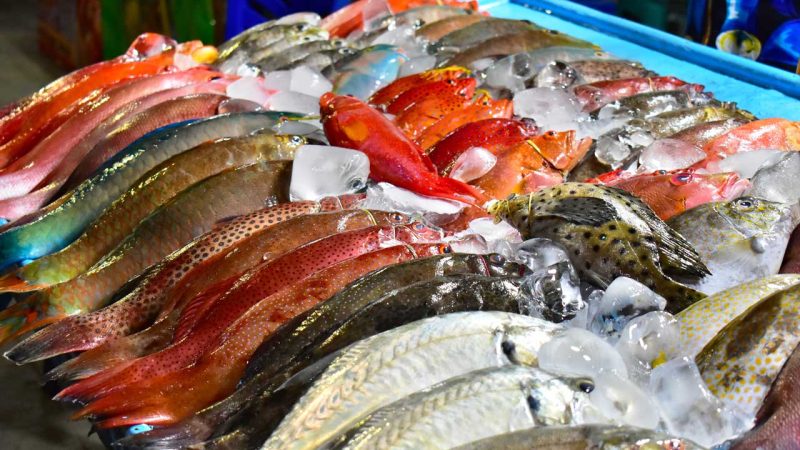
Kampung Ujung. indonesia.travel points visitors to Kampung Ujung as the local food centre of Labuan Bajo. Our guide to Labuan Bajo describes the waterfront and Kampung Ujung in the evening, when stalls set up by the water, mostly serving fish and seafood brought in that day. Stalls and menus change, so what is on offer varies from one evening to the next.
Warungs. A warung is a small, informal, often family-run eatery serving everyday Indonesian dishes. The word is used across Indonesia.
Restaurants and cafés. The town also has sit-down restaurants and cafés serving a range of cuisines.
This page does not rank or compare any of these.
What this page does not cover
This page does not recommend restaurants, give prices or opening hours, or advise on food hygiene, dietary needs or alcohol. For general guidance on staying well while travelling, see our travel health advice for the region. Meals on boat trips are not covered here.
Frequently asked questions
Traditional Manggarai and wider Flores dishes that use corn, cassava, sweet potato and rice, cooked by boiling, steaming, grilling or smoking, alongside everyday Indonesian food. Names differ between sources.
A dense, sesame-topped bread from the Manggarai area, traditionally cooked in a wood-fired hearth and often dipped in coffee or tea, according to Voice of Indonesia (21 August 2026). Its origin is believed to be an adaptation of bread introduced by the Chinese community.
indonesia.travel describes se’i as smoked meat cooked in the traditional Flores way. A Manggarai e-magazine from 2024 describes a smoked meat under a different name, nuru cuing. This page does not settle where the name se’i originates.
indonesia.travel names Kampung Ujung as the local food centre. Stalls there set up in the evening, mostly serving fish and seafood, and what is on offer varies.
No. This site does not list or rank businesses. The page describes local dishes and the kinds of places that serve food in town.