Is Komodo worth it? For some travellers it is the highlight of a trip to Indonesia; for others the heat, the boat time and the cost outweigh what they came for. There is no single answer, so this page sets out what decides it: what the trip offers, what it asks of you, and the questions worth answering before you book.
Komodo Yacht is an independent information site. It does not sell trips, so it has no reason to talk you into going or out of it.
What makes Komodo different
Komodo National Park has been a UNESCO World Heritage Site since 1991. It is listed on two grounds: exceptional natural beauty, and the importance of its wildlife and habitats.
The best-known reason to go is the Komodo dragon. Wild dragons live only in this part of Indonesia: on islands inside the park, including Komodo and Rinca, and in northern and western Flores. Inside the park, you see them at a small number of designated sites, on marked routes and with a guide, rather than by searching on your own.
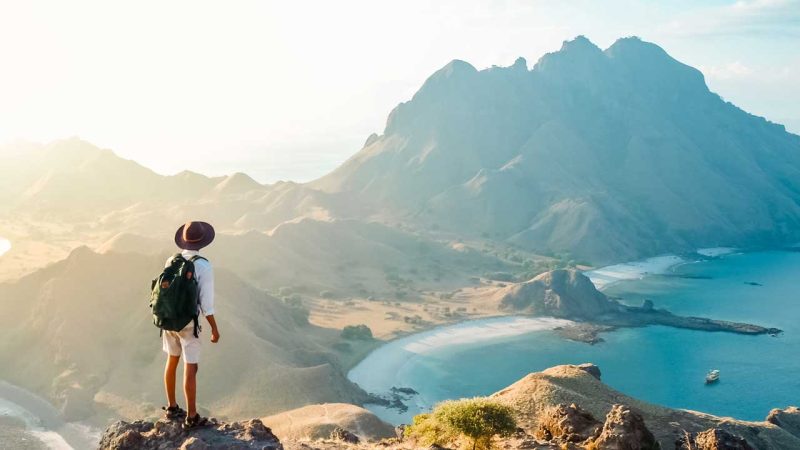
The landscape is the second draw. The view from the ridge on Padar, with its curving bays, is the image most people associate with Komodo.
The third is the water. The park’s reefs and currents are a large part of why people snorkel and dive here, although not every site suits snorkelling.
What the trip asks of you
Time
Komodo is not a quick add-on. Most visitors fly to a major Indonesian airport and then on to Labuan Bajo, and from there the park is reached only by boat. How much you see depends on how long you give it: a shorter trip covers fewer stops, and which ones it drops depends on the route. Our guide to how trip length changes what you see explains how itineraries are put together.
Cost
The price of a trip has several layers: charges set by the government, fees for licensed services such as guides, and the operator’s own price. Published figures disagree, and two quotes that look similar may not include the same things. Our guide to how the cost of a trip is made up explains what each layer covers.
Heat and effort on land
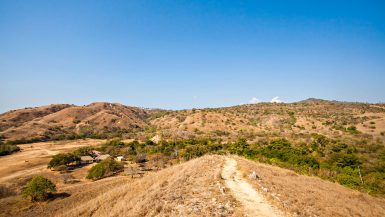
The walks in the park are short but exposed, with very little shade, and heat is the main consideration for most of the year. Padar is the most demanding: a climb that is short by hiking standards but continuously uphill, on steps of uneven height.
Time at sea
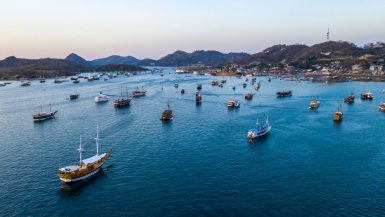
A Komodo trip means hours on a boat. Seasickness affects some people, and the weather can change plans after a trip has started. The harbour authority in Labuan Bajo can restrict or suspend tourist sailing at short notice when sea conditions require it.
Crowds and the visitor limit
The park has become much busier. Officials of the park authority, Balai Taman Nasional Komodo, have reported 429,509 visitors in 2025 and a daily visitor limit of 1,000, said to be in effect since 1 April 2026. These figures come from official statements reported in the press rather than a published regulation, and booking park entry early matters more than it used to.
What cannot be promised
Nobody can promise you a dragon sighting, a calm sea or a clear sunrise. Dragons are wild animals, and some stops depend on conditions on the day. Our guide to why a sighting cannot be guaranteed explains how dragon observation works and why.
If these things matter to you
- If heat or steep steps are difficult for you, the Padar climb is the part to think about first.
- If you are prone to seasickness or dislike boats, consider how much sea time a trip involves before choosing its length.
- If seeing dragons is the main reason, know that observation takes place at managed sites with guides, but no encounter is guaranteed.
- If you have limited mobility, ask how passengers are taken ashore at each stop.
- If your dates fall in a busy period, book park entry early because of the daily limit.
- If the green landscape matters to you, remember that the hills are green in the wet season and brown later in the dry season, when seas are generally calmer.
Questions to answer before you book
- How many days can I give it?
- How much time on a boat am I comfortable with?
- Am I comfortable with heat and a steep climb?
- What matters most to me: the dragons, the view, or the water?
- Does my budget cover more than the operator’s price?
If your answers point to a short visit, a longer one, or no visit at all, any of those can be the right decision. What matters is making it with the trade-offs in view.
Frequently asked questions
It depends on what you want and what you are comfortable with. Komodo offers wild dragons, a dramatic landscape and rich marine life, but it also involves heat, time on boats, a layered cost and conditions nobody can guarantee. Weigh those against your priorities before you book.
Wild Komodo dragons live only in this region, and inside the park they are observed at designated sites with a guide. A sighting is not guaranteed, though. The park also offers its landscape and its waters, which many visitors value as much as the dragons.
That depends on the trip you choose. The total includes government charges, licensed services and the operator’s price, and quotes that look similar may include different things. Compare what each quote covers rather than the headline price alone.
There is no fixed number. A shorter trip covers fewer stops, and what it leaves out depends on the route. The right length depends on how much of the park you want to see and how much time on a boat suits you.
The main practical risks for most visitors are heat, sun and conditions at sea. Walks are exposed, boat plans can change with the weather, and dragons must be observed with a guide. Following your guide’s instructions and local advice covers most of what visitors need.
The wet season brings greener hills and more frequent rain, often as heavy afternoon showers. Seas are less predictable, and open crossings can be uncomfortable. If a green landscape matters more to you than calm water, the rainy season can still suit you.